


Temple of Literature: Exploring Vietnam’s First University in the Heart of Hanoi


Introduction: A Journey into Vietnam’s Ancient Wisdom
Amid the busy streets of central Hanoi lies the Temple of Literature, a peaceful sanctuary of learning, culture, and tradition. Built nearly a thousand years ago, this complex was Vietnam’s first national university and remains a proud symbol of the country’s deep respect for education and intellectual achievement.
Today, the Temple of Literature attracts both locals and travelers who come to experience Vietnam’s scholarly past and enjoy a quiet moment in the heart of the capital.
A Glimpse into History: From Confucian Temple to National University
The Temple of Literature was founded in 1070 under Emperor Lý Thánh Tông to honor Confucius and promote Confucian teachings. Six years later, Emperor Lý Nhân Tông established the Imperial Academy right next to it — officially marking the birth of Vietnam’s first university.
Initially reserved for royal princes and nobles, the academy later opened its doors to talented commoners who excelled in imperial examinations. Over the centuries, countless scholars studied here, many of whom went on to become high-ranking mandarins serving the Vietnamese court.

Architecture and Layout: Harmony in Every Courtyard
The Temple of Literature is not just a historical monument — it’s a masterpiece of Vietnamese traditional architecture. The complex is divided into five courtyards, each reflecting a stage in the journey of learning and enlightenment:
-
The First Courtyard – Enter through the majestic Great Gate of Success and walk along a tree-lined path symbolizing purity and wisdom.
-
The Second Courtyard – Marked by the Great Middle Gate, this area celebrates talent and virtue.
-
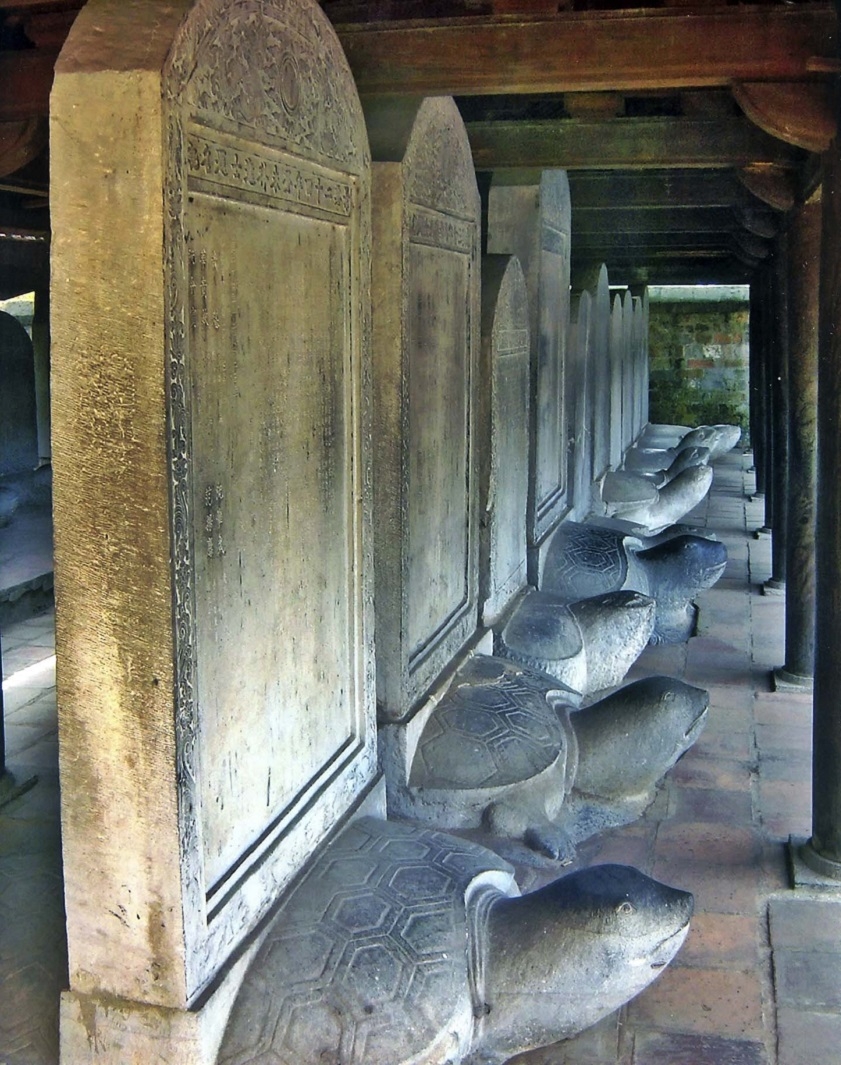
The Third Courtyard – Home to the Well of Heavenly Clarity and the iconic Stelae of Doctors, where 82 stone turtles bear steles engraved with the names of scholars who passed royal exams between 1442 and 1779. These stelae were recognized by UNESCO as part of the World Documentary Heritage (Memory of the World) in 2010.
-
The Fourth Courtyard – Dedicated to Confucius and his disciples, this courtyard holds the main temple with altars, lacquered statues, and burning incense.
-
The Fifth Courtyard – Once the Imperial Academy, where scholars studied. Today, it features displays of ancient manuscripts, traditional costumes, and exhibits on Vietnam’s educational history.
Each gate, pond, and garden is designed with symbolic meaning, showing the harmony between nature, learning, and virtue — the core of Confucian philosophy.
The Meaning of the Stone Turtles
Among the temple’s most fascinating features are the 82 stone turtles, representing wisdom, stability, and longevity.
In Vietnamese culture, the turtle is one of the four sacred animals (along with the dragon, phoenix, and unicorn) and symbolizes patience and knowledge. Each turtle carries a stone stele listing the names and birthplaces of successful scholars. These inscriptions honor intellectual achievement and serve as moral lessons for future generations.
Recognized by UNESCO as part of the World Documentary Heritage (Memory of the World) in 2010, the stelae are invaluable records of Vietnam’s academic history.
Today, visitors are often drawn to the turtles for their spiritual significance. Many Vietnamese students come here before exams to pray for good luck — a modern echo of an ancient scholarly tradition.
Confucian Philosophy and Vietnamese Education
The Temple of Literature reflects the deep influence of Confucianism on Vietnamese society. Confucius taught that education and moral integrity were the foundation of a just and harmonious world.
Inside the temple, every architectural element — from the orderly courtyards to the symbolic gates — embodies Confucian ideals of balance, respect, and virtue. The site also emphasizes the connection between learning and ethical behavior, a concept still highly valued in Vietnamese culture today.
Even now, the temple serves as a venue for academic ceremonies, calligraphy exhibitions, and cultural festivals, where locals celebrate scholarship and artistic expression.
Why You Should Visit the Temple of Literature
For travelers, the Temple of Literature offers more than a history lesson — it’s an experience that connects you to the spirit of Vietnam’s scholarly past.
-
Cultural depth: Learn about Vietnam’s ancient education system and its Confucian roots.
-
Peaceful ambiance: The quiet courtyards and bonsai gardens make it a perfect escape from Hanoi’s bustling traffic.
-
Beautiful architecture: Wooden pavilions, tile roofs, and intricate carvings reflect timeless Vietnamese craftsmanship.
-
Photo opportunities: The red gates, lotus ponds, and ancient stone turtles provide stunning backdrops for photography.
-
Good luck rituals: Many Vietnamese students visit before exams to pray for success — a charming tradition you can witness firsthand.
Practical Information for Visitors
📍 Location: 58 Quốc Tử Giám Street, Đống Đa District, Hanoi
🕒 Opening Hours: 8:00 AM – 5:00 PM (daily)
💵 Entrance Fee: Around 30,000–50,000 VND (~$1–2 USD)
🚖 Getting There:
-
By taxi or motorbike from Sword Lake (about 10 minutes).
-
By bus (routes 02, 23, or 38) or a short Grab ride.
🕰️ Best Time to Visit:
-
Early morning or late afternoon for softer lighting and fewer crowds.
-
January–March during the Lunar New Year period for festive decorations and cultural events.
Cultural Tips for Visitors
-
Dress respectfully — it’s a sacred site.
-
Avoid loud talking; the temple is a place for reflection.
-
Don’t climb on the turtle stelae — they are national treasures.
-
If you visit during Tết (Lunar New Year), look for local calligraphy masters offering handwritten characters for good fortune.
Beyond the Temple: Nearby Attractions in Hanoi
After exploring the Temple of Literature, continue your cultural journey to:
-
Ho Chi Minh Mausoleum Complex – Vietnam’s most iconic national site.
-
One Pillar Pagoda – A symbol of purity and harmony.
-
Old Quarter – A lively maze of food stalls, cafés, and craft shops.
Conclusion: A Symbol of Vietnam’s Respect for Knowledge
The Temple of Literature isn’t just a monument; it’s a living symbol of Vietnam’s thousand-year-old tradition of learning, virtue, and respect for knowledge.
For any traveler seeking to understand the heart of Vietnamese culture, a visit to this temple offers a meaningful journey — from the echoes of ancient scholars to the modern students who still come to seek wisdom and inspiration.
images: Collected
Plan Your Trip with TripAsean Tours
👉 Contact TripAsean Tours: For customized trip planning, hotel recommendations, and expert travel tips.
-
-
-
-
-
-
- 📞 Hotline: +84 961 518 918
- 🌐 Website: www.tripasean.com
- 📧 Email: info@tripasean.com
- 📝 Let me know your request: Fill out the form here
-
-
-
-
-
Related Posts

Mui Ne Jeep Tour: Ride Through Vietnam’s Mini Desert at Bau Trang
Dalat Cherry Blossom Season 2026 | Wild Himalayan Blossoms
Ancient Xoan Singing in Phu Tho – A Unique Cultural Tourism Experience
Lo Lo Chai and Then Pa: Two Unique Villages in Lung Cu, Ha Giang
Tây Nguyên Gong Culture – UNESCO Intangible Heritage of the Highlands
Vietnamese Opera – Vietnam’s Traditional Theater Art
Buffalo Racing Festival: Where Sport Meets Khmer Culture in An Giang

Chau Phong Village: Preserving the Art of Cham Brocade Weaving in An Giang
The Water Lily Season in Ninh Binh – Ngo Dong River Transforms into a Dreamy Purple Ribbon
Bun Bo Hue: The Legendary Heritage Behind Vietnam’s Spicy Noodle Soup
5 Vietnamese Snail Restaurants Recommended by Michelin

JW Marriott Phu Quoc Named One of Asia’s Top 5 Resorts

Ban Gioc Waterfall – The Biggest Waterfall in Vietnam

Bai Dinh Pagoda – The Majestic Beauty of A Pure Place

Ha Long Bay – Things you need to know

Hanoi Old Quarter – Things you need to know
Hoi An Ancient Town – World Cultural Heritage

Ninh Binh – Maybe you don’t want to miss this majestic place

A city in the midst of the fog – Sapa

Ha Giang