


Khmer Five-Tone Music: A Unique Cultural Heritage


Khmer five-tone music plays a vital role in the spiritual, cultural, and social life of the Khmer community, appearing in religious rituals, festivals, and traditional ceremonies.
The Role of Five-Tone Music in Khmer Community Life
In the daily life of the Khmer community, five-tone music holds an essential place and appears in many important ceremonies and social events. It is performed during religious rituals at Khmer pagodas, life-cycle ceremonies, traditional festivals, community gatherings, and cultural and artistic activities.
More than just a form of music, five-tone music serves as a spiritual bridge between humans and deities, expressing the community’s hopes for peace, happiness, and harmony. Its presence strengthens social bonds and reflects the deep spiritual beliefs of the Khmer people.
A Distinctive Cultural Heritage of the Khmer People
For the Khmer community, five-tone music is considered a core element of religious and cultural life. In Khmer temples, this music accompanies major ceremonies, helping to create a sacred and solemn atmosphere. During traditional festivals in Khmer villages, the sound of five-tone music brings vitality and unity, connecting generations through shared cultural experiences.
When combined with the graceful traditional dances of Khmer women, five-tone music forms a unique cultural space that reflects the community’s aesthetic values and collective identity.
Structure of the Five-Tone Orchestra and Eastern Philosophy
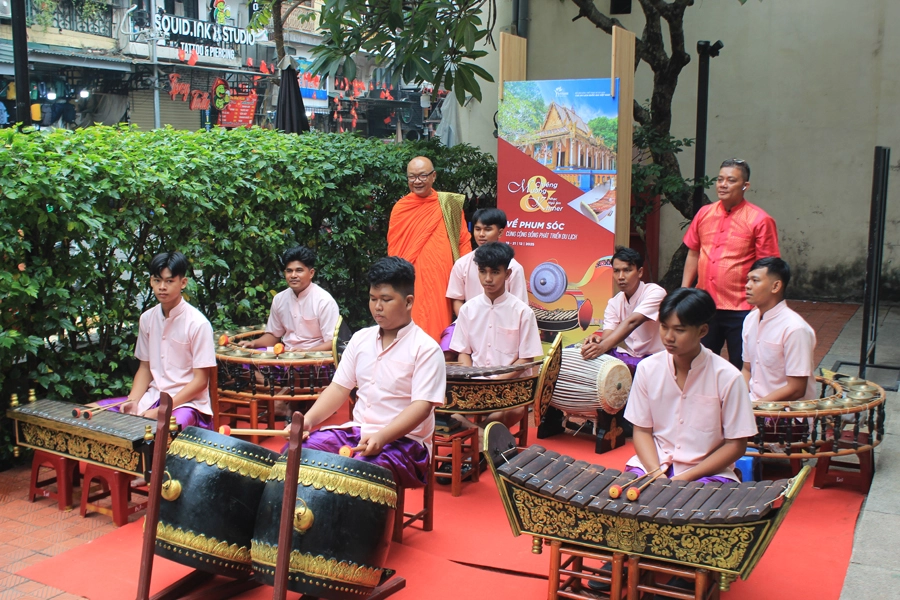
The Khmer five-tone orchestra is built on the philosophy of the Five Elements (Metal, Wood, Water, Fire, and Earth), symbolizing balance and harmony in nature. This structure also reflects the Eastern concept of yin and yang, emphasizing equilibrium and interconnectedness.
The five main instrumental groups include:
-
Metal: Rôneat Đek (metal xylophone)
-
Wood: Rôneat Ek and Rôneat Thung (wooden xylophones)
-
Water: Srolai Pinn Peat (traditional wind instrument)
-
Fire: Kuông Vông Tôch, Kuông Vông Thum, and Chhưng (gong instruments)
-
Earth: Samphô and Skô Thum (traditional drums)
Each instrument is carefully tuned to ensure harmony across the entire orchestra. When performed together, they create a rich and expressive soundscape—ranging from deep and powerful tones to soft, melodic, and emotional melodies that resonate deeply with listeners.
Artistic Value and Cultural Expression
Khmer five-tone music is primarily instrumental, focusing on rhythm and melody rather than lyrics. Its expressive power lies in its ability to convey emotion and meaning through sound alone. When paired with traditional dance, the music enhances storytelling and ceremonial performances, offering audiences an immersive cultural experience.
This combination highlights the artistic creativity and spiritual depth of the Khmer people, making five-tone music a living symbol of their cultural heritage.
Preserving and Passing on the Heritage
The transmission of intangible cultural heritage from older generations to younger ones plays a crucial role in preserving five-tone music. Teaching young people to understand and appreciate its cultural value helps foster a sense of responsibility and pride in protecting their heritage.
When young generations truly connect with this tradition, they become the key force in sustaining and revitalizing Khmer cultural practices in the future.
Linking Cultural Preservation with Sustainable Tourism
Preserving and responsibly promoting five-tone music not only protects cultural identity but also contributes to local livelihoods. Traditional musicians and craftsmen benefit when cultural heritage is integrated into tourism activities.
By showcasing authentic cultural performances and local products, communities can attract visitors while maintaining cultural integrity. This approach supports sustainable tourism development and brings long-term economic value to local areas.
Conclusion
Khmer five-tone music is more than a traditional art form—it is a powerful expression of spirituality, philosophy, and community identity. Preserving and promoting this heritage helps safeguard an important part of Khmer culture while opening opportunities for cultural tourism and sustainable development. Through continued transmission and thoughtful preservation, five-tone music will remain a living and meaningful legacy for future generations.
images: collected
Plan Your Trip with TripAsean Tours
👉 Contact TripAsean Tours: For customized trip planning, hotel recommendations, and expert travel tips.
-
-
-
-
-
- 📞 Hotline: +84 961 518 918
- 🌐 Website: www.tripasean.com
- 📧 Email: info@tripasean.com
- 📝Let me know your request: Fill out the form here
-
-
-
-
Related Posts

Hanoi Tet Flower Markets & Spring Traditions
Ba Na Hills Spring 2026: Tulip Festival at Sun World
ASEAN Tourism Forum 2026 in Philippines
Non Nuoc Cao Bang Geopark in Winter
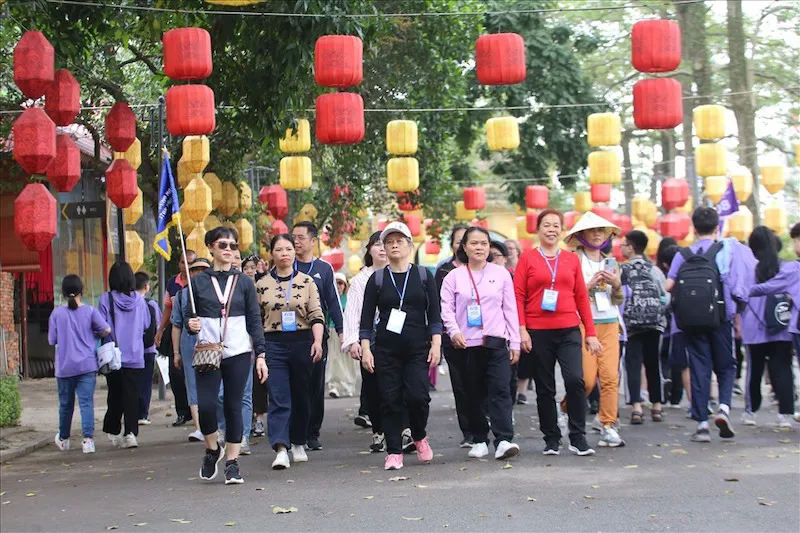
Chinese Tourists to Vietnam Drive Tourism Boom in 2025
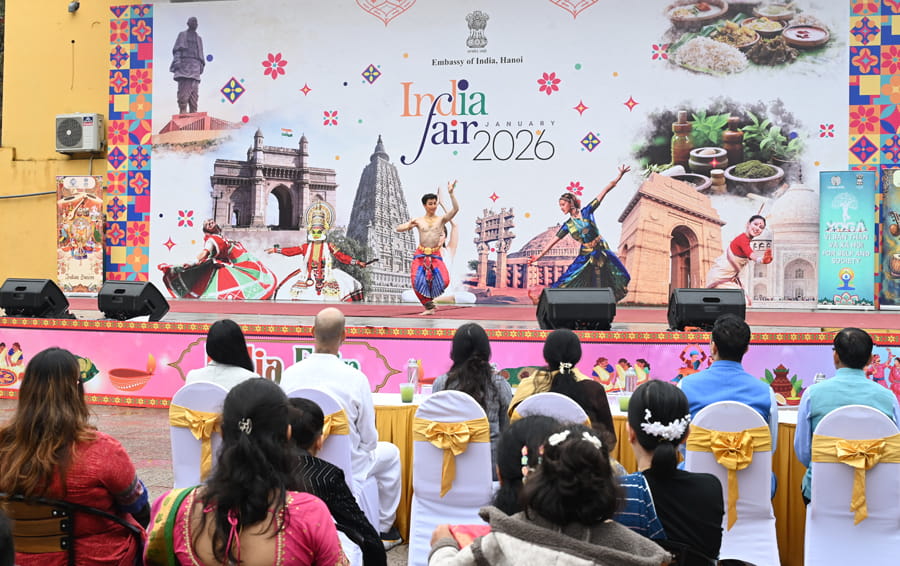
India Fair 2026 Celebrates Vietnam–India Partnership
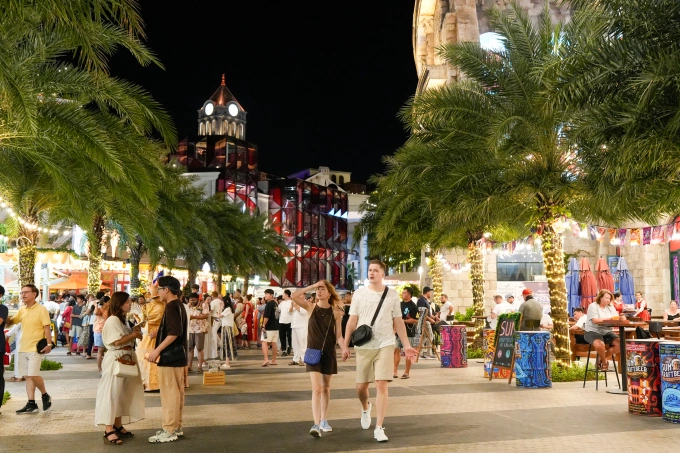
New York Times Names Vietnam a Rising Travel Destination for 2026

Phu Quy Island Among Top 10 Pristine Destinations in Southeast Asia 2026
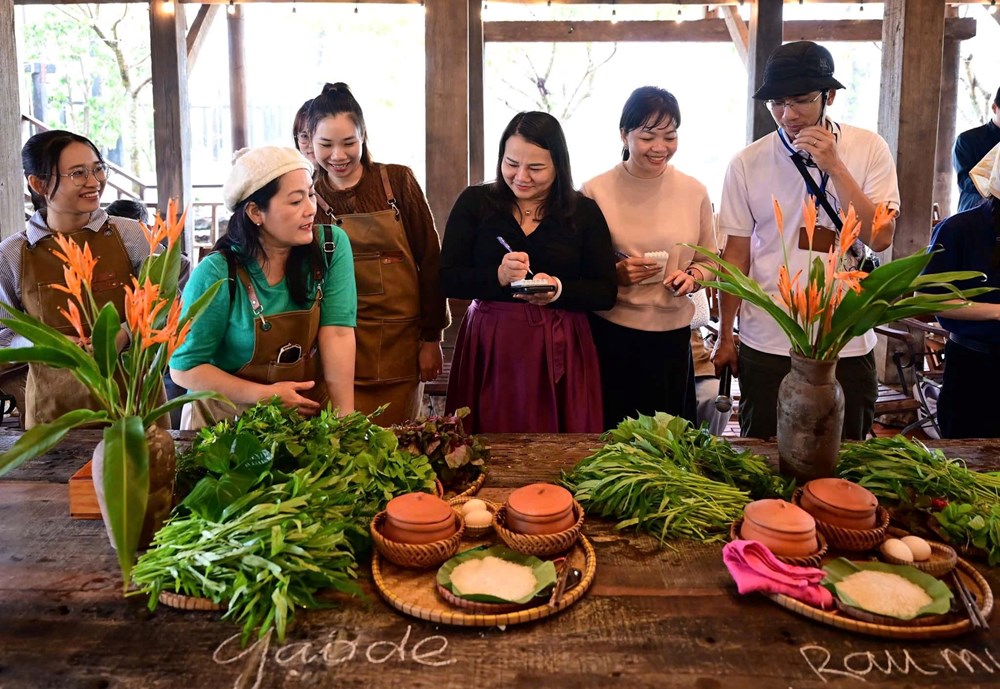
Rural Tourism in Hue: A Sustainable Development Model
Sa Dec Flower Village | National Intangible Cultural Heritage of Vietnam
Hanoi Heritage Walking Tour | Touching Memories at Truc Bach
Vietnam’s First Pho Museum Opens in Ho Chi Minh City in 2026

Ban Gioc Waterfall – The Biggest Waterfall in Vietnam

Bai Dinh Pagoda – The Majestic Beauty of A Pure Place

Ha Long Bay – Things you need to know

Hanoi Old Quarter – Things you need to know
Hoi An Ancient Town – World Cultural Heritage

Ninh Binh – Maybe you don’t want to miss this majestic place

A city in the midst of the fog – Sapa
Ha Giang